Secondhand & Thrift
Online Resale and the Charity Shop Are Different Businesses
Both sell used goods and almost nothing else about them is the same. Which one suits an item depends on weight, brand and how fast you need it gone.
This looks at resale channels for used goods from the practical end — what holds up once conditions stop being ideal.
What holds up in practice
- Online reaches a national buyer pool; shops reach a walking one.
- Postage cost determines which items suit which channel.
- Selling takes time that the charity shop absorbs for you.
The buyer pool is the whole difference
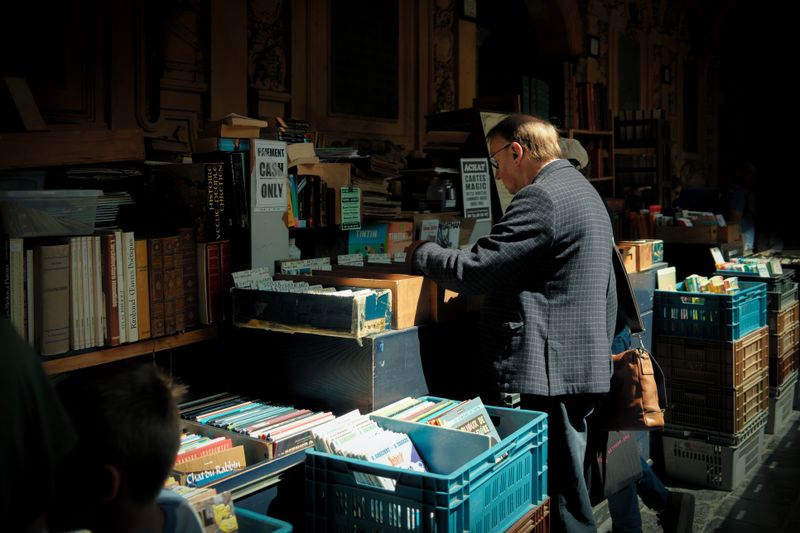
A charity shop sells to whoever walks past, which for a specialised item may be nobody in a given month. An online listing reaches everybody searching for that item nationally, which for a specialised item is a completely different market.
For ordinary goods the local pool is sufficient and the online advantage evaporates against the cost of listing and posting. The dividing line is roughly whether somebody would search for the item by name, which is a good proxy for whether the wider pool matters. This single distinction explains almost all of the routing decisions charity retailers now make.
Postage decides more than value
Postage cost scales with weight and dimensions, so a heavy low-value item cannot be sold profitably online at any price. That is why books, furniture, kitchenware and bulky toys stay in shops while jewellery, small electronics and branded clothing move online. Packaging materials, time and the risk of damage in transit all sit on the seller and are consistently underestimated.
Platform fees, payment fees and buyer protection schemes take a further share, typically a meaningful percentage of the sale price. Running those numbers before listing prevents the common experience of selling something for less than it cost to send.
Time is the hidden price
Photographing, describing, listing, answering questions, packing and posting an item takes a surprising amount of time per sale. For low-value items that time is worth more than the proceeds, which is the honest argument for donating rather than selling. Charity shops absorb all of that labour, which is precisely the service they provide to the donor.
Sellers who value their time properly find the crossover point sits higher than they expected, often well into three figures. Bulk-listing tools and consignment services exist for people selling regularly and change the calculation considerably.
What each channel does badly
Charity shops undersell branded and collectable goods, because a fast sale to a local buyer is worth more to them than a slow optimal one. Online markets undersell anything requiring physical inspection, since buyers discount for the risk they cannot check. Local collection-only listings sit between the two and work well for furniture, though they attract the highest rate of no-shows.
Auction formats suit items with uncertain value and genuine competition, and suit almost nothing else.
Choosing the wrong channel typically costs more than choosing the wrong price.
The charity's own online operations
Most large charity retailers now sell online themselves, which captures the value the shop would have lost on high-value donations. That means donating a valuable item to a chain with an online operation often realises more for the charity than a shop-only donation. Some platforms also allow private sellers to direct proceeds to a nominated charity, which combines the reach with the donation.
Sorting the donation bags, selling yourself and donating the proceeds usually maximises the charity's income, at the cost of your time. Which of these is right depends entirely on how much your time is worth and how much the item is.
Tax treatment of donations varies by country and by the way the gift is made.
A simple routing rule
Heavy, cheap, common: donate it, because the shop's local buyer pool is exactly the right market and your time is not worth the postage. Light, valuable, searchable: sell it and donate the proceeds, or donate it to an organisation with an online operation.
Bulky and valuable: use a local collection listing, since neither postage nor the shop floor works well for it. Broken, stained or incomplete: dispose of it properly rather than passing the disposal cost to a charity. The rule takes seconds to apply and produces a materially better outcome than the usual approach of putting everything in one bag.
The takeaway
Route by weight and searchability, and the right channel picks itself.
Passed on beats recycled, and both beat replaced.
Questions readers ask
Should I sell things and donate the money instead of donating goods?
For light, valuable, searchable items usually yes, since you capture value the shop cannot. For heavy or ordinary goods the shop is the better route and your time is better spent elsewhere.
Why do charity shops sell some items online?
Because a national buyer pool pays substantially more for branded or collectable goods than a local one. The extra income funds the organisation's work and the shop keeps the rest.
Also by Nirmala Saxena
- Naming a Charity in a Will Without Creating a ProblemGiving & Donating
- What Employer Matching Schemes Actually MatchGiving & Donating
- The Second Gift Is the One Fundraisers Care AboutGiving & Donating
- The Volunteer Roles Charities Struggle Hardest to FillVolunteering