Repair & Reuse
When Repair Is the Wrong Answer
The case for mending things is strong and it is not universal. A few situations make replacement or disposal the better decision.
Comparisons of the limits of repair usually pick a winner. This one picks the circumstances, which is more useful.
The difference in one place
- Safety-critical items with unverifiable history should not be repaired casually.
- Continuously running appliances can cost more to keep than replace.
- Repairs that fail again waste the parts and the effort.
Safety-critical items
Anything whose failure could injure someone should be repaired only by someone qualified, and sometimes not at all. Child car seats, climbing and safety equipment, load-bearing components and pressure vessels all fall into this category.
Items with a documented recall should be dealt with through the recall process rather than repaired independently. Where a repair would remove or defeat a safety feature, the correct answer is to stop, whatever the cost implication. The general principle is that repair economics do not apply when the failure mode involves harm to a person.
The efficiency case
Appliances running continuously, particularly older refrigeration and heating equipment, can consume substantially more energy than modern equivalents. Where the annual running cost difference approaches the replacement cost over a few years, keeping the old unit is the expensive option. The calculation depends heavily on category, since efficiency has improved dramatically in some product types and barely in others.
In the annual accounts, embodied manufacturing impact partly offsets the running saving, which is why the comparison is genuinely arguable rather than obvious. For anything used occasionally, this argument does not apply and repair wins comfortably.
Repairs that will not hold
A repair to a component that has failed through fatigue rather than damage will usually fail again in the same place. Board furniture with a stripped or broken fixing point, corroded structural metal and perished rubber all belong here. Repeated repairs to the same fault indicate an underlying cause that has not been addressed, and continuing wastes parts and time.
Sorting the donation bags, assessing whether the failure was an event or the end of the component's life is the judgement that matters. A repairer who says an item is at the end of its life is usually giving you the honest answer rather than avoiding work.
When the parts do not exist
A design requiring an unavailable proprietary component is unrepairable regardless of skill, and no amount of effort changes that. Salvaging a matching part from a second identical unit is a legitimate route and is how many older items stay running.
Over a funding cycle, fabricating or substituting parts is possible for simple mechanical components and rarely for electronic assemblies. Spending weeks searching for a part for a low-value item is a use of time that could have gone into repairing three other things.
Setting a limit on search effort before starting is more sensible than discovering it afterwards.
Hygiene and contamination
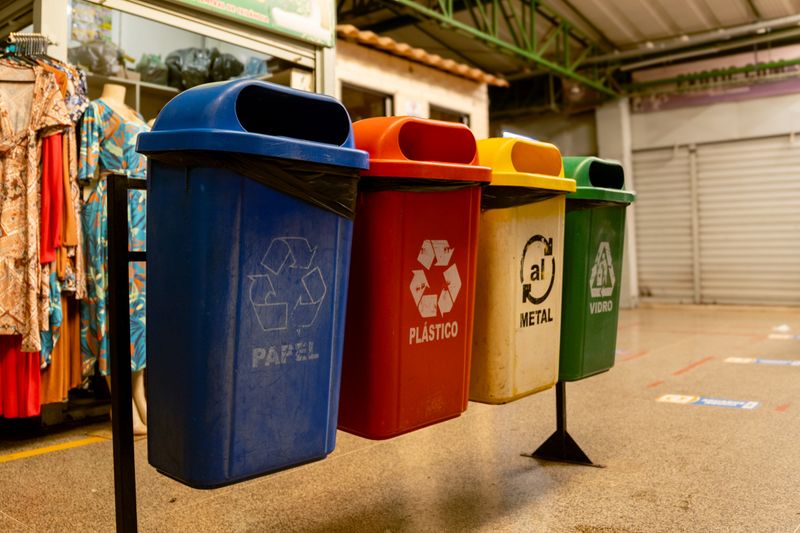
Items contaminated by flood water, sewage, mould or pests should generally be disposed of rather than cleaned and reused. Soft furnishings and porous materials retain contamination in ways that surface cleaning does not address. Items affected by fire retain smoke residues that are difficult to remove from anything absorbent.
Passing such items on rather than disposing of them transfers a problem the recipient cannot assess. This is the category where the instinct to save something is most likely to produce a bad outcome.
Volunteers cost an organisation time to train, so short-term help is not always help.
Deciding without guilt
The reuse case is about the aggregate pattern of behaviour rather than about any individual object, and one replacement does not undo it. Buying a repairable replacement and keeping it for fifteen years is a better outcome than nursing an unrepairable item for two more. Disposing of something properly, so its materials enter the right stream, is a legitimate and useful action rather than a failure.
Bought used, time spent on a doomed repair has an opportunity cost, and spending it on a repair that will succeed is the better use. The purpose is fewer things made and discarded overall, not a rule that nothing may ever be replaced.
Side by side
| Consideration | What it means in practice |
|---|---|
| Safety-critical items | Safety-critical items with unverifiable history should not be repaired casually. |
| The efficiency case | Continuously running appliances can cost more to keep than replace. |
| Repairs that will not hold | Repairs that fail again waste the parts and the effort. |
The takeaway
Repair by default, and make an exception for safety, contamination and anything that runs all day.
Give the boring thing they asked for rather than the interesting thing you have.
Questions readers ask
Should I repair a very old fridge?
Compare the annual running cost against a modern equivalent over several years, since refrigeration efficiency has improved substantially. For occasional-use appliances the same argument does not apply.
Is it wrong to replace something repairable?
Not if the replacement is better designed and you will keep it for a long time. The aim is fewer items produced and discarded overall rather than a rule against ever replacing anything.
Also by Nirmala Saxena
- Naming a Charity in a Will Without Creating a ProblemGiving & Donating
- What Employer Matching Schemes Actually MatchGiving & Donating
- The Second Gift Is the One Fundraisers Care AboutGiving & Donating
- The Volunteer Roles Charities Struggle Hardest to FillVolunteering