Volunteering
The Corporate Volunteering Day, Honestly Assessed
A team day out at a charity produces real work about half the time. What separates the useful ones from the decorative is decided weeks in advance.

The options around corporate volunteering days are set out side by side below, with the conditions that genuinely favour one over the other.
The difference in one place
- Booking the day before agreeing the task is the usual failure.
- Bulk physical work suits large one-off groups; service delivery does not.
- Paid volunteering leave is worth more than the day itself.
What goes wrong most often
The typical sequence is that a date is chosen, a team is committed and a charity is then approached to supply something for thirty people to do. That reverses the useful order, since the organisation now has to invent work rather than fill a genuine gap.
Invented work is why corporate days sometimes involve repainting a fence that did not need painting, which everybody present can tell. The charity accepts anyway, because refusing a corporate relationship costs future donations, sponsorship and possibly a longer-term partnership. The result is a day that feels good, produces little and consumes several days of somebody's preparation.
What large groups are genuinely good for
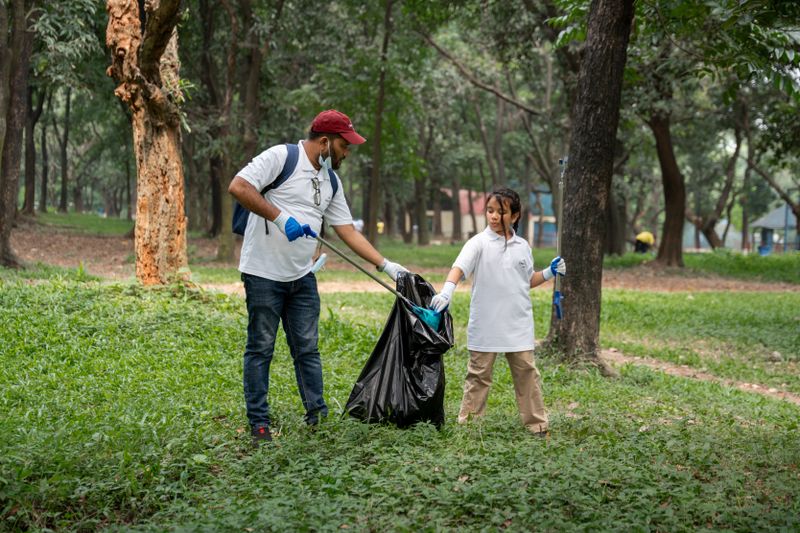
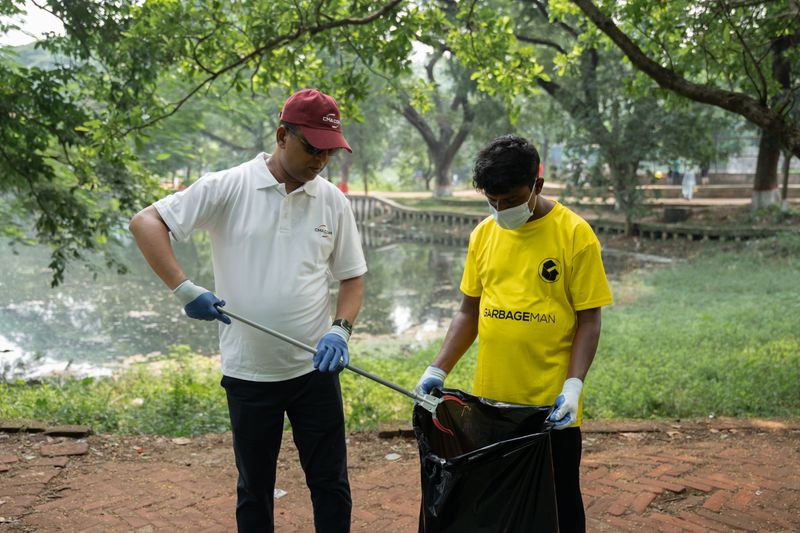
Tasks with high volume, low judgement and easy supervision absorb large groups well: clearing ground, painting, packing, sorting and building. Conservation and outdoor work is the archetype because the work is genuinely endless and the marginal volunteer always adds something.
Seasonal peaks are another good fit, including packing for winter distributions or preparing an event that would otherwise be understaffed. Projects with a fixed physical outcome also give the charity something concrete to show a funder afterwards. If the organisation cannot name a task of this kind, that is useful information rather than a reason to invent one.
The preparation the charity has to do
A group day requires risk assessment, materials, tools, supervision ratios, welfare arrangements and usually a member of staff dedicated to the day itself. Materials cost money the charity is spending in order to receive free labour, which inverts the usual assumption about who is subsidising whom. Several organisations now charge a participation fee for corporate days, which covers the preparation and is entirely reasonable.
A fee also filters for companies serious about the outcome rather than about the photographs, which improves the experience for everyone. Employers reacting badly to a fee have usually not understood what they are asking for.
What the employer is actually buying
Corporate volunteering is generally funded from engagement, recruitment or marketing budgets rather than from charitable giving, which shapes what it optimises for. Studies of workplace engagement generally find volunteering programmes associated with retention and morale, though disentangling cause from selection is difficult. That is a legitimate reason to run a programme, and stating it openly makes the charity relationship healthier rather than worse.
Problems arise when the charitable benefit is claimed as the primary purpose and then designed for as an afterthought.
The honest version, where the company says it wants a team day that also helps, produces better decisions.
Better structures than a single day
Volunteering leave, where employees get paid days to use individually on a role of their choosing, produces far more useful hours than one group outing. Skills-based programmes matching professional staff to organisational needs deliver value the charity would otherwise have paid for.
Multi-year partnerships allow the charity to plan, and typically combine funding, skills and volunteering rather than only the last. Sending the same group back repeatedly converts a one-off into a relationship with a learning curve behind it. Each of these is harder to photograph and considerably more useful than the alternative.
Organising one that works
Contact the organisation months ahead and ask what they need, then build the day around the answer rather than the other way round. Offer to cover materials and any staff cost, and treat that as part of the contribution rather than as an unexpected demand. Handle all checks and paperwork in advance so the day itself is not consumed by administration.
Ask afterwards what the value was and whether returning would help, and be prepared for an honest answer. If the honest answer is that a donation would have helped more, take that seriously rather than doing it again next year.
Side by side
| Consideration | What it means in practice |
|---|---|
| What goes wrong most often | Booking the day before agreeing the task is the usual failure. |
| What large groups are genuinely good for | Bulk physical work suits large one-off groups; service delivery does not. |
| The preparation the charity has to do | Paid volunteering leave is worth more than the day itself. |
The takeaway
Ask what they need before you book the date, and accept the answer even if it is a cheque.
Passed on beats recycled, and both beat replaced.
Questions readers ask
Should a charity charge for a corporate volunteering day?
Many do, and it is reasonable given the preparation, materials and supervision involved. A company unwilling to cover those costs is asking the charity to subsidise its team day.
What is the best corporate volunteering format?
Paid individual volunteering leave generally produces the most useful hours, because employees choose roles that fit and can return regularly. Group days work best for bulk physical work.